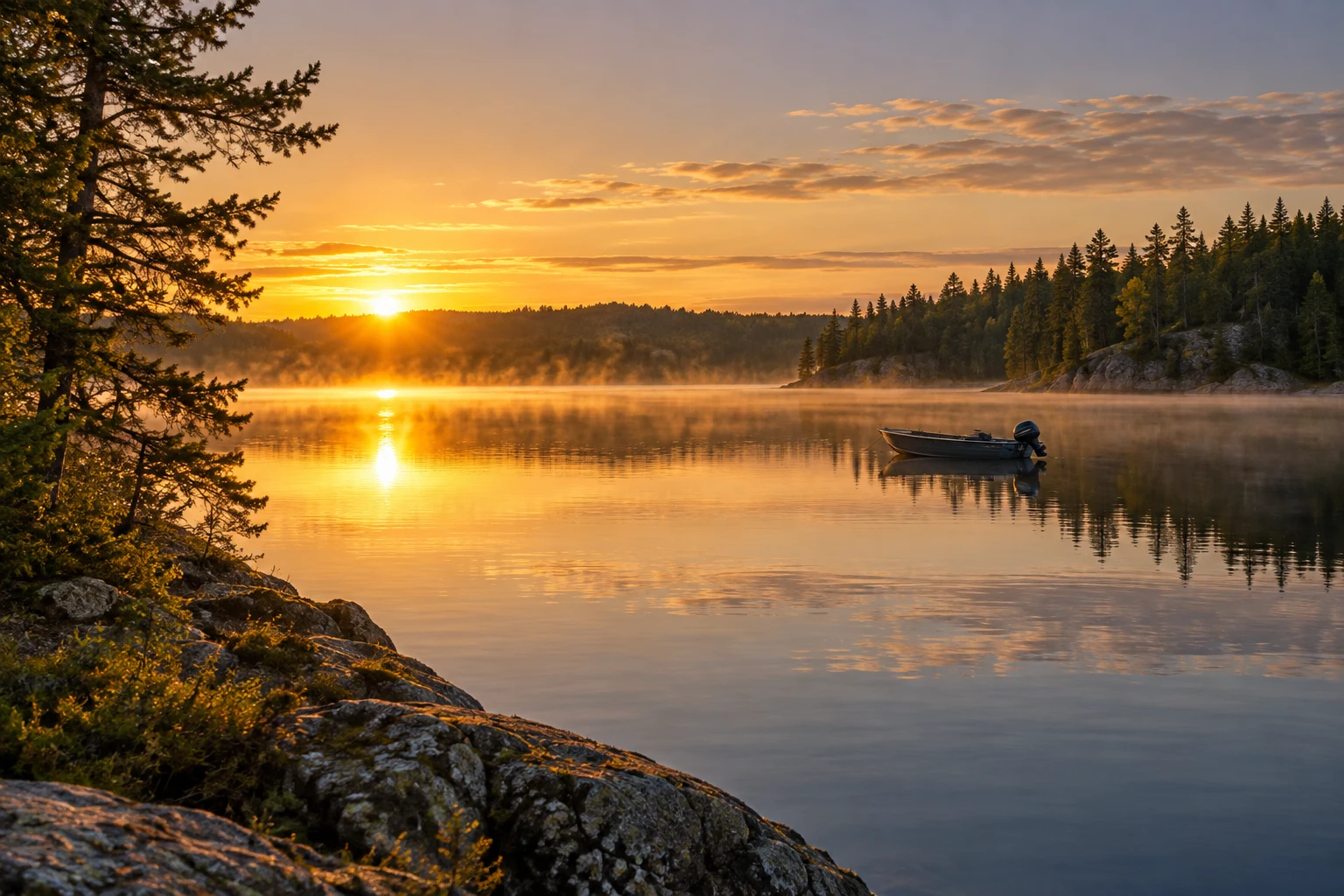
Observe the setting
Walleye fishing is often associated with lower-light periods. That broad idea should be a starting point for observation rather than a reason to ignore conditions or local rules. Record cloud cover, visibility and the time along with your presentation. Two outings described as evening fishing may have very different access, weather and water conditions. Compare the whole situation before attributing a result to the clock.
Plan for reduced visibility
Prepare lighting and retrieval arrangements before darkness becomes a problem. Identify the route back, protect night vision where practical and check applicable navigation-light requirements. If the site becomes uncomfortable or unsafe, leave. A notebook can record an unfinished session as honestly as a successful one. No potential bite makes poor visibility or an unfamiliar return route an acceptable surprise.
A short trip checklist
- Record light conditions.
- Prepare the return route.
- Leave when visibility is unsuitable.
Official resources
Check location-specific rules and current guidance before your outing.